
Project Details
Overview
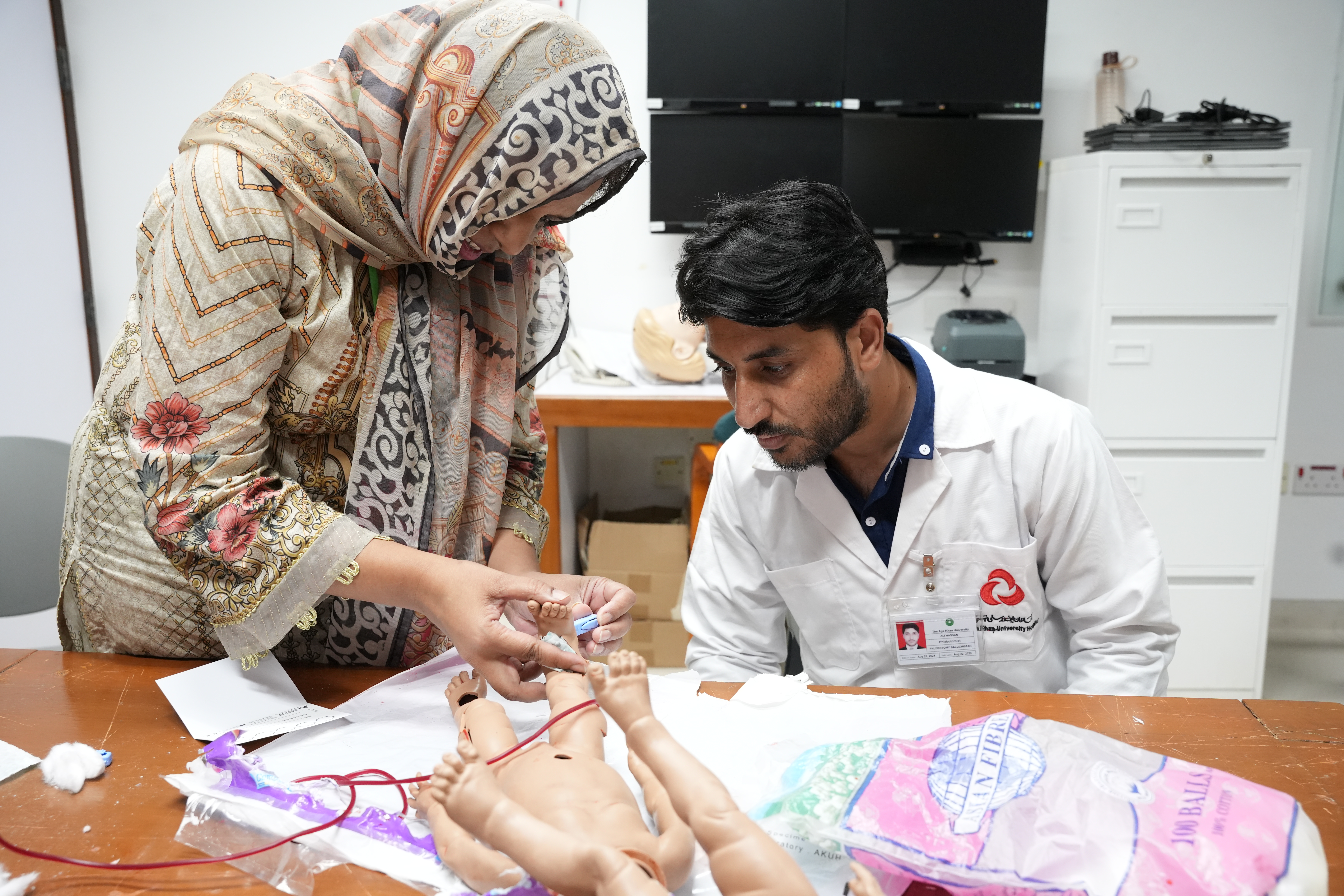
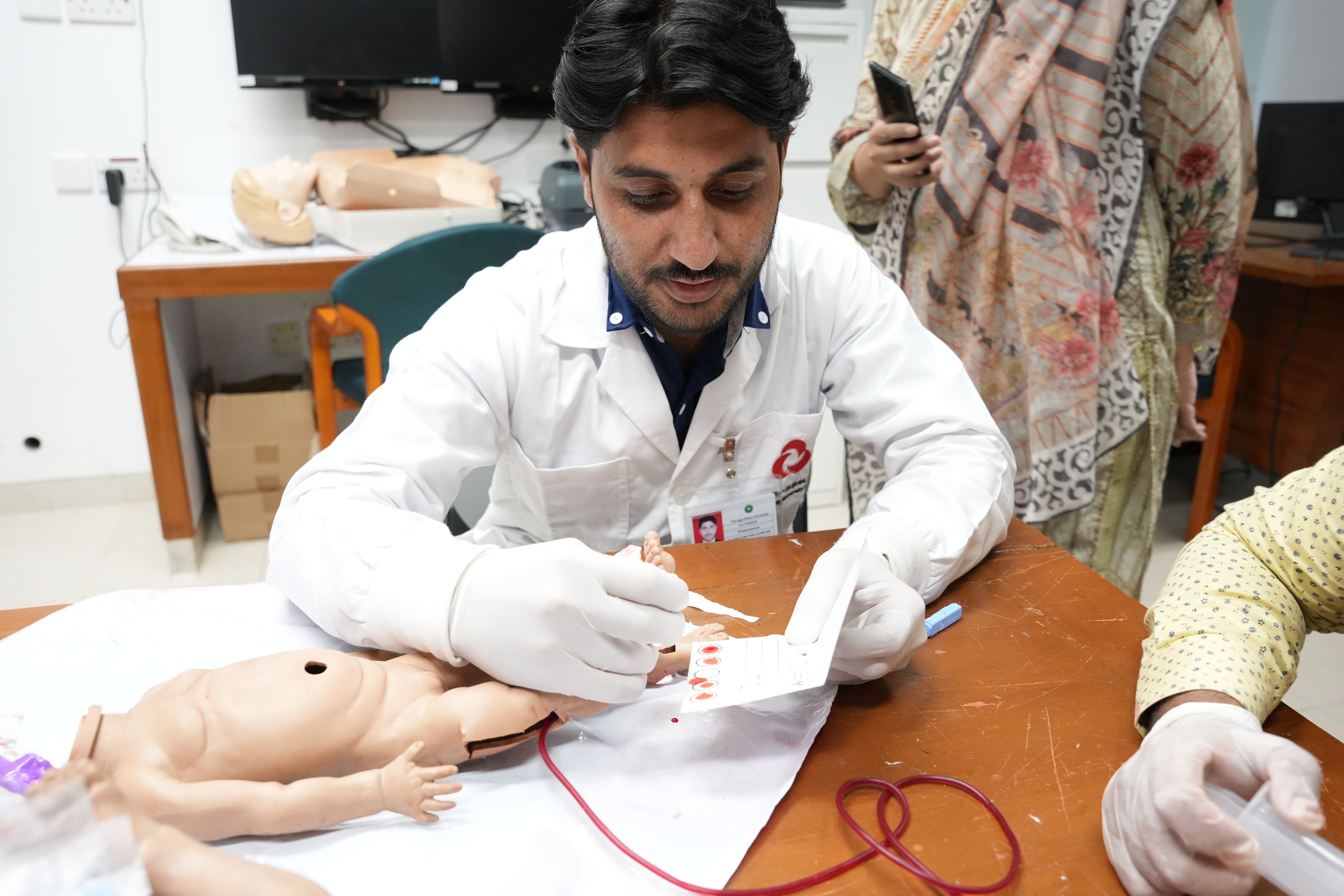
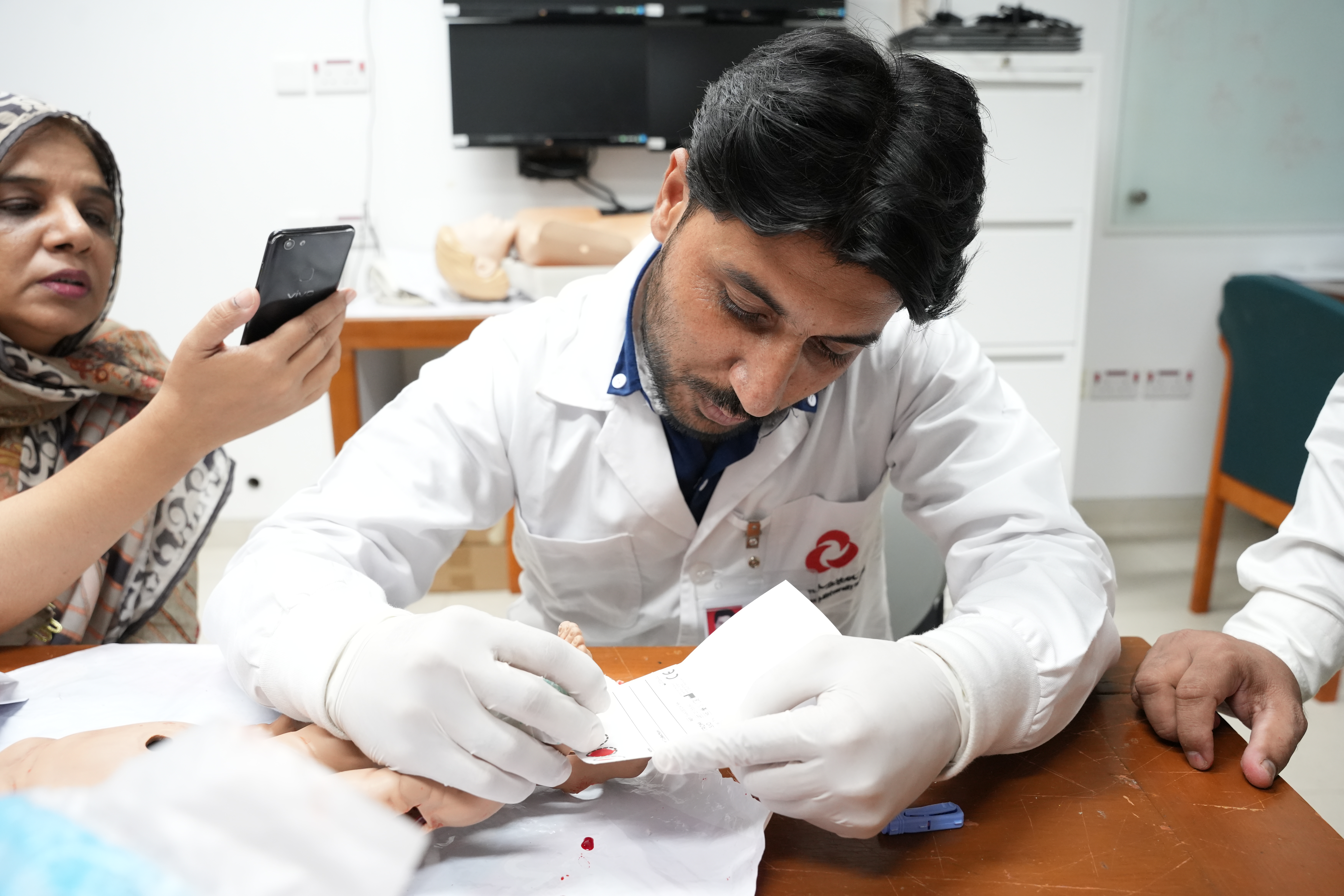
The Heel Prick Simulator is an innovative, in-house-developed training tool aimed at addressing a significant gap in neonatal care training. Unlike commercially available simulators, which typically only simulate blood collection by filling a reservoir and removing it, our simulator provides healthcare professionals the opportunity to practice the critical skill of performing a realistic heel prick, including puncturing the skin, drawing blood, and handling the procedure with lifelike tactile feedback. This feature is essential for preparing practitioners for real-world procedures, where precision and technique are crucial.
Key Features:
- Realistic skin and tissue simulation to replicate the feel of an infant's heel, enhancing the authenticity of the training experience.
- Affordable, in-house design created using materials and methods that significantly reduce costs compared to existing commercial solutions.
- Practical blood collection feature allowing users to perform heel pricks and collect blood, a unique feature not present in available commercial models.
- Customizable design to simulate various scenarios such as different skin thicknesses or patient conditions, ensuring a broad range of learning experiences.
Development Approach:
- The Heel Prick Simulator was developed with a strong focus on providing hands-on practice for healthcare professionals, addressing the lack of a suitable simulator for training in this specific area.
- The team designed and tested the model in collaboration with healthcare professionals to ensure that it met clinical training needs and provided authentic feedback.
- An iterative development approach allowed the simulator to evolve with user feedback, enabling continuous improvements to the design and functionality.
- Unlike traditional simulators, this innovation allows users to perform a realistic heel prick using an actual lancet, followed by collecting blood on a heel prick filter paper, just as it is done with real patients.
Importance of Heel Prick Procedure & Training:
- Heel pricks are a routine but essential procedure performed on neonates, typically for blood sampling to screen for various metabolic and genetic disorders. Accurate and effective performance of the heel prick is crucial for:
- Screening for critical conditions: Heel pricks are used for newborn screening tests, such as screening for phenylketonuria (PKU), cystic fibrosis, and other genetic disorders. Early detection of these conditions is critical for timely treatment and improved outcomes.
- Reducing procedural pain: Proper technique minimizes unnecessary pain for the infant, reducing both immediate discomfort and potential long-term trauma.
- Improving clinical outcomes: Accurate heel pricks ensure that proper blood samples are collected without unnecessary repeats, leading to faster diagnoses and better care.
Training Statistics:
- Over 4 million heel pricks are performed annually on newborns worldwide for screening purposes.
- Training effectiveness: A study in the Journal of Pediatrics found that healthcare professionals trained on realistic simulation models perform 50% better in real-life scenarios compared to those with no simulation training.
- Error rates: Healthcare professionals with no training or insufficient practice have an 8-12% higher error rate when performing heel pricks compared to those who use high-fidelity simulators.
Impact:
- By providing a cost-effective, hands-on training tool, the Heel Prick Simulator addresses the current gap in available training solutions. It enables healthcare professionals to practice the skill safely, ensuring better clinical outcomes and reduced procedural errors in neonatal care.
Current Status:
- The simulator is still in the development and enhancement phase, with ongoing testing and iterative improvements based on feedback from healthcare professionals. This continuous cycle ensures the simulator remains up-to-date and effective for training needs.